
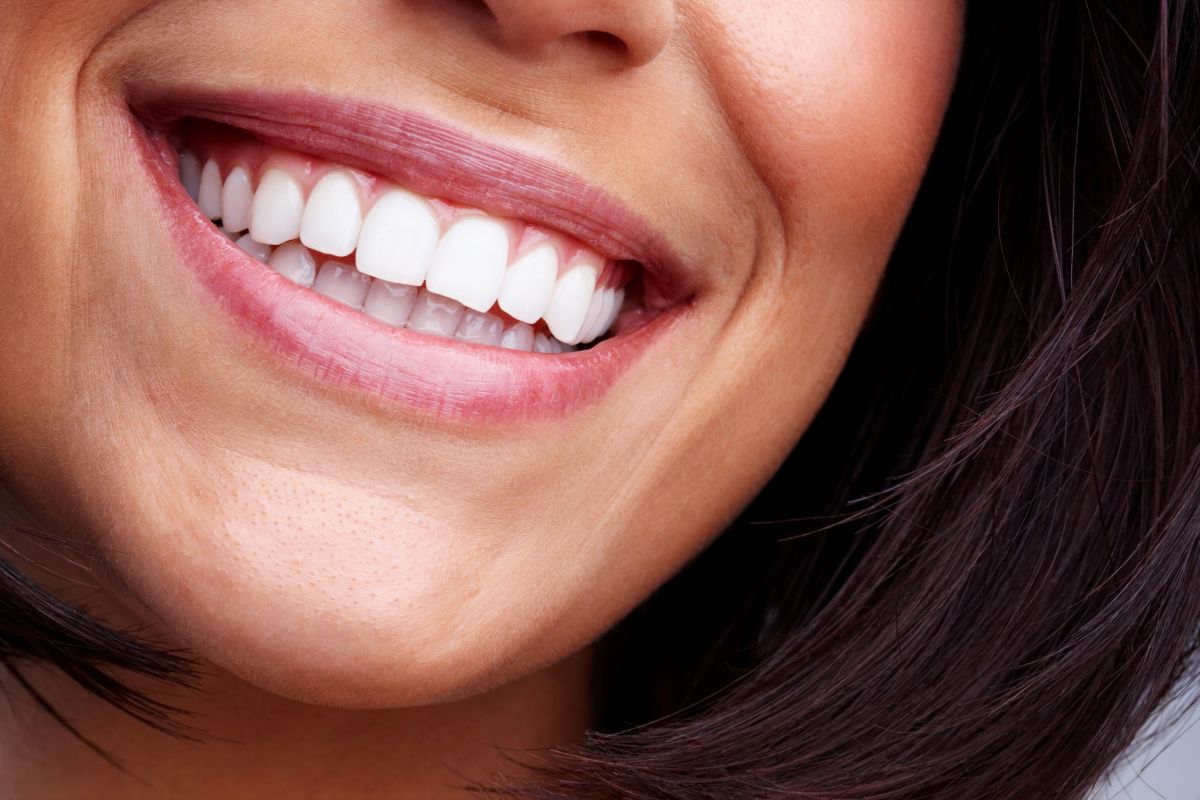
A chip that's bothered you for years. A smile that's more gapped or gray than you'd like. Teeth that just don't match how the rest of you feels. Dental veneers are one of the most dramatic ways to change how your smile looks, and one of the most permanent decisions in cosmetic dentistry. Here's what they actually involve before you commit to anything.
What Are Dental Veneers?
Dental veneers are thin, custom-made shells, most commonly porcelain. They're bonded to the front surface of your teeth to change their color, shape, size, or alignment1. Veneers are different from crowns because they only cover the front of the tooth, not the entire structure. That makes them a more conservative option when the rest of the tooth is healthy. Veneers are typically used to correct teeth that are chipped, worn, gapped, or noticeably uneven in shape, plus discoloration that whitening can't fix.
Porcelain Veneers vs. Composite Veneers
There are two main types of veneers, and the difference matters for both cost and how long they'll last1. A dental lab fabricates your porcelain veneers from precise impressions of your teeth. They're known for being strong, long-lasting, and highly resistant to staining. Dr. Handa builds composite veneers up directly on the tooth by hand, similar to dental bonding, and can often finish them in a single visit for a lower cost, though they don't hold up quite as long.
Composite Veneers
- Applied directly, often in one visit
- Lower cost than porcelain
- Lasts several years, easier to repair
Porcelain Veneers
- Custom lab-made, two visits
- Higher cost, more durable
- Highly stain-resistant, lasts 10 to 20 years
Are Veneers Permanent?
Effectively, yes. Placing a veneer requires removing a small amount of enamel from the front of the tooth so the shell sits flush and looks natural. Enamel does not grow back1. This is the single biggest thing to understand before moving forward. Once you've prepared a tooth for a veneer, that tooth will need a veneer, or something like it, going forward. The veneer itself can eventually be replaced. If you ever chose to stop using veneers altogether, the tooth would still need some form of restoration. It wouldn't return to how it looked before treatment.
Veneers change your tooth permanently. Bonding does not. That one distinction should drive most of the decision.
Dental Veneers vs. Crowns
Veneers and crowns solve overlapping but different problems. A veneer covers only the visible front surface. It's used mainly for cosmetic correction on a tooth that's otherwise structurally sound. A dental crown covers the entire tooth. It's used when more of the tooth is damaged, weakened, or already heavily filled, where function matters as much as appearance. If a tooth just looks wrong, it's usually a veneer conversation. If it's cracked, badly decayed, or has had significant work done, a crown is more likely the right call. Dr. Handa will tell you plainly which situation you're in.
How Long Do Veneers Last, and What Do They Cost?
Porcelain veneers commonly last 10 to 20 years with good care1. Composite veneers typically last several years before needing replacement or touch-up. Cost depends on the material, how many teeth are involved, and the complexity of the shade-matching and shaping required. Porcelain options cost more than composite since they're custom-fabricated. Both cost more than dental bonding for a comparable single-tooth fix. Dr. Handa will walk through real numbers for your case during a consultation, so you're deciding with full information, not a guess.
Veneers Before and After: What Actually Changes
The most common transformations: closing small gaps, evening out a tooth that's a different shape than its neighbors, covering stubborn discoloration, and softening chipped or worn edges. Ask to see real before and after examples from cases similar to your own during your consultation. Seeing a shade, gap, or chip close to your situation gives a far more realistic sense of the outcome than any stock photo can.
Frequently Asked Questions
Do veneers ruin your teeth?
No, but they do permanently change them. Dr. Handa removes a small, precise amount of enamel to place the veneer. That's why the process isn't reversible, though it isn't damage in the sense of harming the tooth. It's a tradeoff worth understanding upfront, not a decision to make casually.
How much do veneers cost?
It depends on the material and how many teeth are involved. Porcelain veneers cost more than composite because they're custom lab-fabricated, and both cost more than bonding for a similar single-tooth fix. Dr. Handa gives exact numbers during your consultation.
How long do porcelain veneers last?
Commonly 10 to 20 years with good care and regular checkups. Composite veneers last a shorter time, typically several years, but are easier and less expensive to touch up along the way.
What's the difference between veneers and dental bonding?
Bonding applies composite resin directly on top of your tooth with no enamel removed, and it's reversible. Veneers require removing a small amount of enamel and are permanent. They do last longer and hold up better against staining, especially porcelain. Read more about dental bonding if you're weighing the two.
Am I a good candidate for veneers?
If your teeth are structurally healthy but you don't like how they look, whether it's chips, gaps, shape, or color, you're likely a good candidate. If there's significant decay or a cracked tooth involved, a crown or other treatment may be a better starting point, and Dr. Handa will tell you which situation applies to you.
See If Veneers Are Right for Your Smile
Because veneers are permanent, it's worth talking through your specific teeth and goals before deciding. This is exactly the kind of decision how we approach care at Prana is built around, a consultation with Dr. Handa gives you real answers, not guesses.
Schedule a ConsultationCall us at 978.635.9995 · Acton, MA
Sources & References
- American Dental Association, MouthHealthy. Veneers. mouthhealthy.org